No one tells you it’s so hard – when breastfeeding sucks . . .
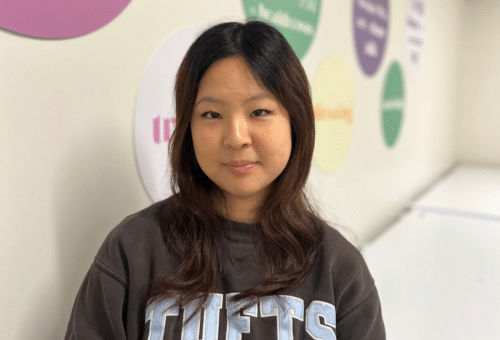
“I had so much support on my journey to becoming a mom. I’m extremely fortunate. And donating milk was a small way I could give back,” explains Tara, mom of one-year-old Elin Rose and three-year-old Tab Steven.
Tara is a dietician committed to ensuring that children and adults have the nutrition they need to thrive. Earlier in her career, she worked in hospital neonatal intensive care units, where she saw firsthand how vital donor milk is for medically fragile babies.
Her background also informs her commitment to breastfeeding her children. And yet she was surprised, shocked even, by how difficult breastfeeding was. “No one tells you it’s so hard,” Tara says. Tab had trouble latching at first. “Breastfeeding hurt. I was determined to figure it out, but I knew I had to accept that it may not work out and just be at peace with that.” Though she persisted with extended breastfeeding, she acknowledges it’s been an ambivalent experience for her, and she had to navigate the challenges of nursing aversion with her son. “Right now, I’m reading a book called, When Breastfeeding Sucks,” she tells me pointedly. (Psst! You can find it here.)
The juggling act . . .
Tara became pregnant again when Tab was just one year old. She assumed he would begin to wean naturally as her due date approached, but that didn’t happen. After baby Elin arrived, little Tab became even more determined to continue nursing.
And so, even though it wasn’t necessarily her plan, Tara chose to tandem nurse them. It was a complicated juggle that still feels overwhelming at times. She wanted to make sure Elin was getting all the nutrition she needed in those early days. However, she didn’t want to deny Tab his “special milk” time, which was still contributing to his development and their bond. Sometimes she nurses both children simultaneously. These moments range from sweet, with siblings holding hands, to chaotic, with one pushing the other away. There’s a metaphor about parenting in there somewhere . . .
“With all the demands on your milk, how did you end up becoming a milk donor?” I asked Tara.
Tara’s milk stash developed when she traveled for work and needed to pump. But her motivation came from wanting to be part of a community that not only helps nourish babies but whole families – often when they need it most.
Mel wanted to be here – an unexpected loss . . .
Tara’s family has faced their own challenges. Her sister-in-law, Suzanne, and her twin sister, Mel gave birth just ten days apart in 2020. Their brother was expecting twin girls just three months later. The close-knit family was overjoyed, dedicated to supporting one another as they prepared to welcome precious new members.
Just three days after delivering her healthy son Henry, Mel sought help as she knew she was experiencing abnormal thoughts and feelings. Mel was admitted to the hospital. Given there are only a few mother-baby units in this country, she was separated from Henry. She was discharged without a diagnosis after 48 hours. Tragically, Mel suffered from postpartum psychosis and took her own life only a week after her son was born.
Mel didn’t want to die, Tara explained to me. She was so very excited to be a mom and aunt. “Mel’s husband, family and friends, thought they had a little more time to help her. They weren’t educated on the signs and symptoms of postpartum psychosis, which is a medical emergency. There is much work to be done at the policy, healthcare institution and individual clinician level to provide adequate resources and education regarding all perinatal mental health disorders. Thank you for always including resources for perinatal mental health in your newsletters,” she adds
A place in the village . . .
Tara sees donor milk as a unique gift. It carries with it the compassion, understanding, and shared commitment of a community of moms who want to help. Mel had a strong desire to nurse Henry, but he was having trouble latching, and the pair were separated during her hospital stay. Looking back, Tara wishes Mel had access to the gift of donor milk during those challenging early days of parenthood. She wants every mom to feel supported. And so, even while keeping up her milk supply for two little ones, Tara set a goal to donate milk so that others could receive it.
“I loved the process of donating. The team was so supportive. It was so easy. Then I came to the milk bank to drop off my milk—and got a tour! I saw a flyer at the front that said one ounce of donor milk can feed a premature baby three meals. That’s when I realized just how many meals my 100 ounces provided. I watched the milk lab at work through the viewing window. I found my classmate Amy’s baby, Aria, represented on the memorial tree for bereaved families. Amy has been a longtime supporter of the milk bank, and seeing Aria honored in that space was yet another meaningful connection. I just knew I had done the right thing.”
And with those 100 ounces, Tara didn’t just meet her goal – she solidified her place in the very village every baby and every parent needs and deserves.
Trusted Resources . . .
Postpartum depression and psychosis can affect many families. During these difficult times, it’s important to remember that seeking support is a sign of strength, not weakness. If you or someone you know is struggling, help and guidance are available through a variety of resources, including: