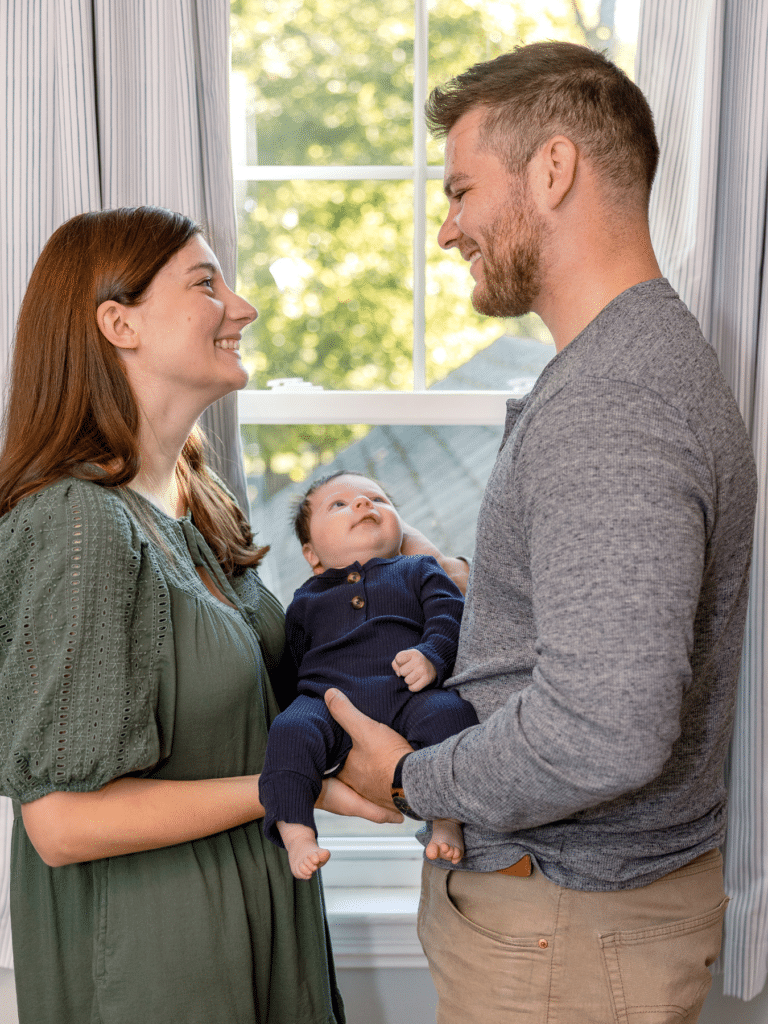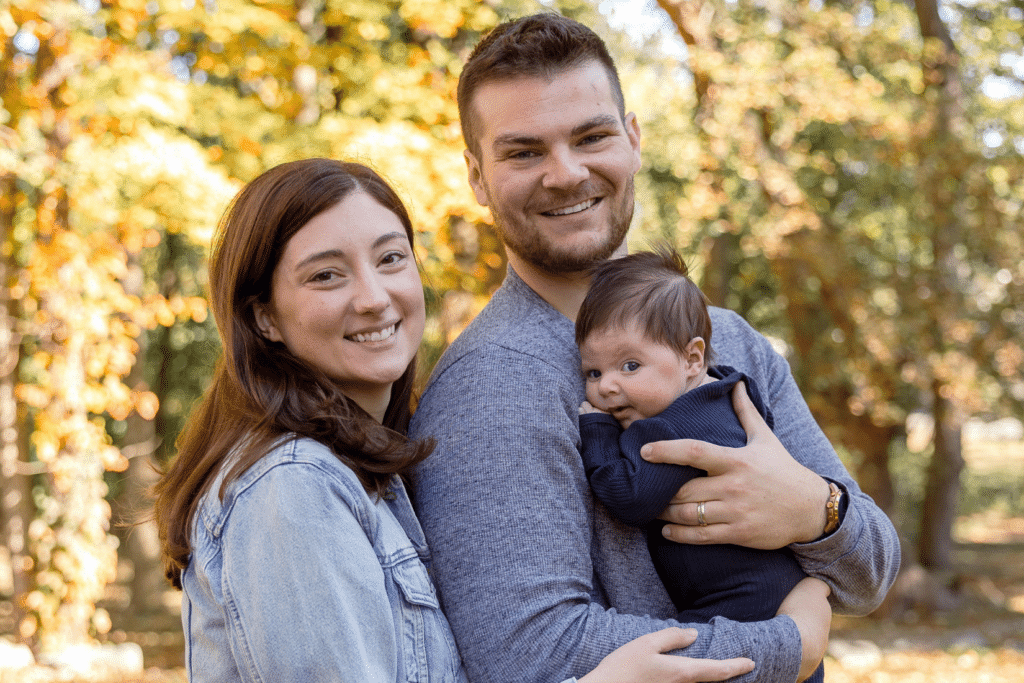
Behind every successful feeding journey is a support system. With Father’s Day just around the corner, we’re grateful to share a story that highlights the many forms support can take. From milk donors to nurses to dads, each plays an important role—especially when families are navigating unexpected challenges. For Jen and Keith, that challenge was an undiagnosed cow’s milk allergy.
Our first deep breath . . .
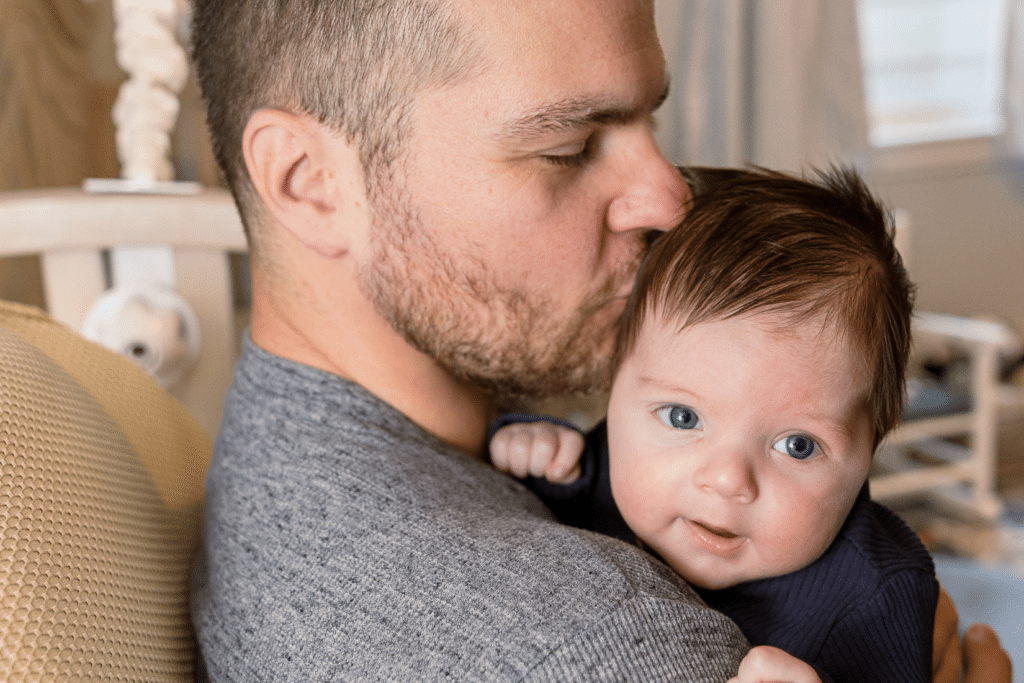
“Birthing parents do so much. They work so hard. As first-time parents, you really don’t know what to expect. When our son Roman was born and started having feeding troubles, we didn’t know what was going on exactly, but we knew something wasn’t right. Donor milk was a lifeline in that moment. It was a Godsend.”
This is how baby Roman’s dad Keith describes receiving donor milk.
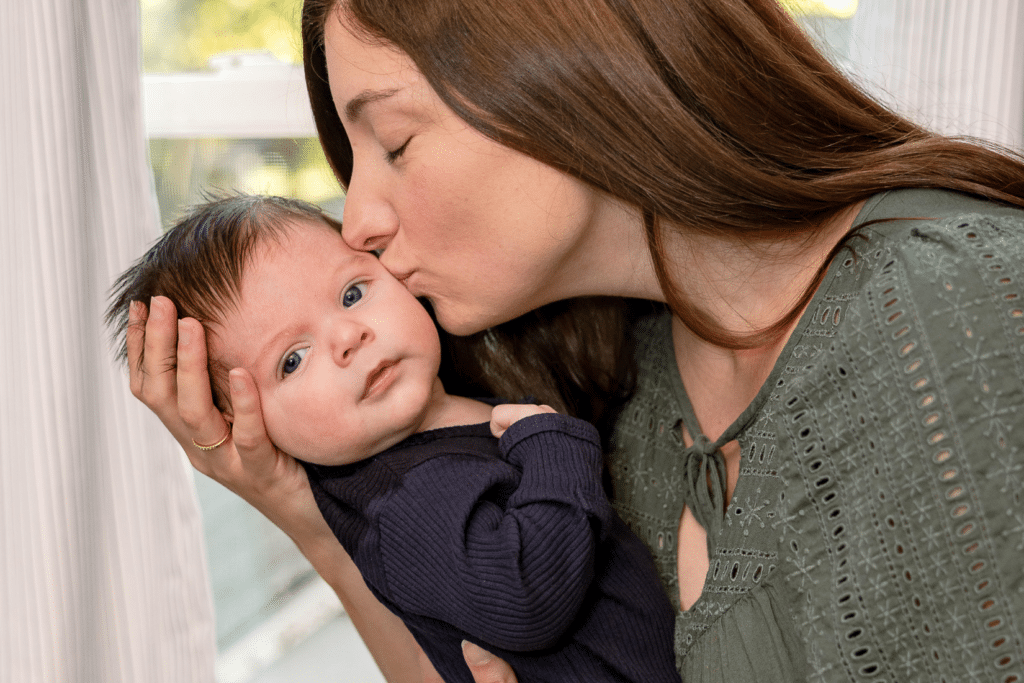
Jen, Roman’s mom chimes in, “Donor milk allowed us to take our first deep breath after he was born. I don’t think thank you is a big enough word.”
Finding a food that fits . . .
Baby Roman was born healthy, at 7 lbs., 14 ounces. Jen and Keith expected to feed him with a combination of formula and breastmilk. But Jen’s milk didn’t come in right away and Roman was throwing up after formula feeding. The nurses didn’t seem too concerned but as parents, they were worried and overwhelmed.
“They [the postpartum nurses] started talking about discharging us and I thought, ‘How am I going to feed this baby?’ At first, no one seemed to have any answers. But then one of the nurses suggested that we try donor milk. That was the first time Roman kept his food down. That was the first time he seemed to feel okay.
And finally, we felt okay too. Like maybe we can do this after all.”
A true offering of kindness . . .
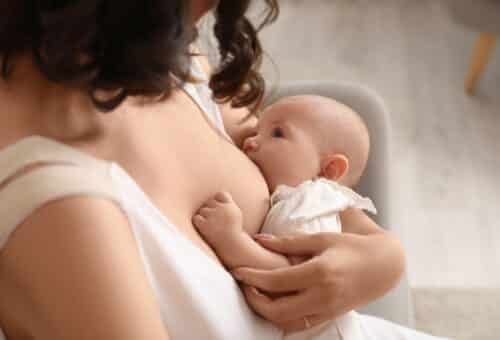
After Roman did so well with donor milk in the hospital, the staff offered Jen and Keith donor milk to take home at discharge. This gave Jen the opportunity to continue nourishing her son while working with lactation specialists to build her own milk supply.
“I had never heard of milk donation before this,” Keith told me. “And I remember thinking, ‘Why would someone donate their milk?’ But then it made such a difference for us. I realized that milk is life, and that donating it, well, that’s a true offering of kindness. I’m so glad to know about it, to know what people will do for others who need help, even when you don’t know them.”
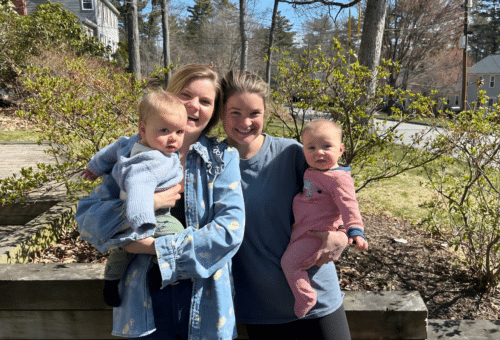
“It’s like everyone says, it takes a village,” adds Jen, “and in our case, our village includes amazing milk donors who we may never even meet.”
Roman’s cow’s milk allergy is diagnosed . . .
Jen’s milk came in a little less than a week after Roman was born. Donor milk successfully provided that bridge to breastfeeding, one of the key public health goals that the milk bank strives to support. For Roman though, it was even more impactful. Because at just six weeks old, he was diagnosed with a cow’s milk allergy.
Now in hindsight, those terrible reactions to formula feeding made sense. He couldn’t tolerate the cow milk-based formula he was given in the hospital. His parents were right to be concerned. “It’s our job to truly study our baby from the beginning. That’s what we’ve tried to do so we could care for him and give him what he needs,” explained Keith.
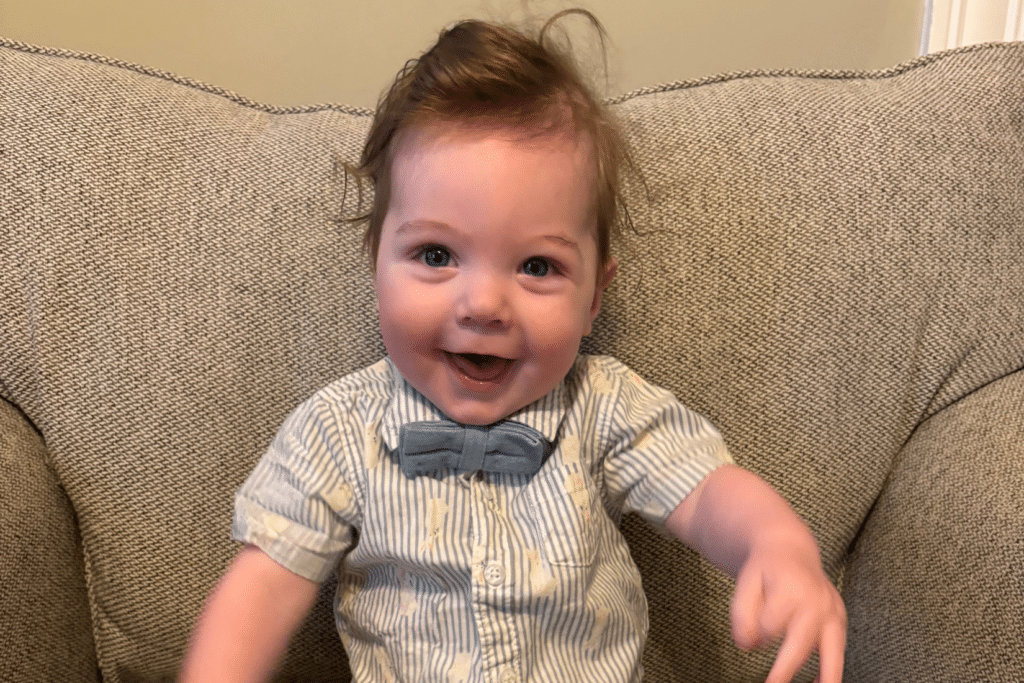
Thankfully, Jen no longer needed to supplement Roman’s feedings. Determined to provide exactly what her son needed, she took on the challenge of eliminating dairy from her own diet. It wasn’t easy, but then, seemingly overnight, it was all worth it. Their once-colicky baby became a ray of sunshine.
“People told me, ‘Maybe you just have a fussy baby,’“ Jen told me. “But he wasn’t just fussy. He had a cow’s milk allergy. He was hurting. And now he’s not. We’re so grateful.”
A leap of faith . . .
Breastfeeding wasn’t easy for Jen and for a long time she was producing just enough to meet Roman’s needs. Still, she held on to the idea of possibly donating milk one day. In the meantime, she chose to give in another way—making a financial gift to the milk bank and even having her company match it.
Not everyone can give milk and that’s okay. Financial support helps ensure donor milk is safely processed and available for the most fragile babies, making it a powerful and deeply meaningful act of kindness.
Over time, Jen’s milk supply started growing and she began thinking more seriously about exploring becoming a milk donor.
“I was really attached to my milk, to our milk. And I knew if I donated it, I would have to replace it so that Roman had enough. My milk surplus wasn’t that big. But I also remember so clearly what it felt like in those scary early days when we didn’t know what was wrong or how to feed our son. And what a relief it was to have the gift of donor milk. I wanted to do that for other families. Donating milk was a leap of faith, but it felt important. It felt worth it.”
You are not alone . . .
“I want to tell those families receiving milk: it’s hard but there are resources to help. There are a lot of different feeding journeys, it’s okay if yours doesn’t look familiar. Just reach out for help. I hope my donor milk can help your baby. But I also hope it can help you. I hope it helps you heal from the unexpected and reminds you that you’re not alone,” Jen added.
“As we were getting ready to become parents, everyone told us this would be the most momentous time of our lives. But they didn’t tell us what to expect beyond that. I’m so grateful there are supports like this along the way,” Keith shared.
And in those early, uncertain days, that support—made possible by this community—helped them realize they could do this after all.
Be Part of it
Like Jen and Keith, you can make a meaningful difference by ensuring families facing the unexpected have access to safe, reliable donor milk when they need it most. Your gift supports the processing and distribution of this critical resource, so it can reach babies who depend on it.